Published May 14, 2026
Community Links Initiative Advocates Peace Building and Good Governance in Benue State
In a significant step toward deepening humanitarian collaboration in Benue State, the Community Links Initiative visited Benue SEMA's headquarters in Makurdi to reaffirm its commitment to peace building, community resilience, and good governance, with a six-year strategic intervention programme already underway in some of the state's most affected communities.
A Visit Rooted in Purpose
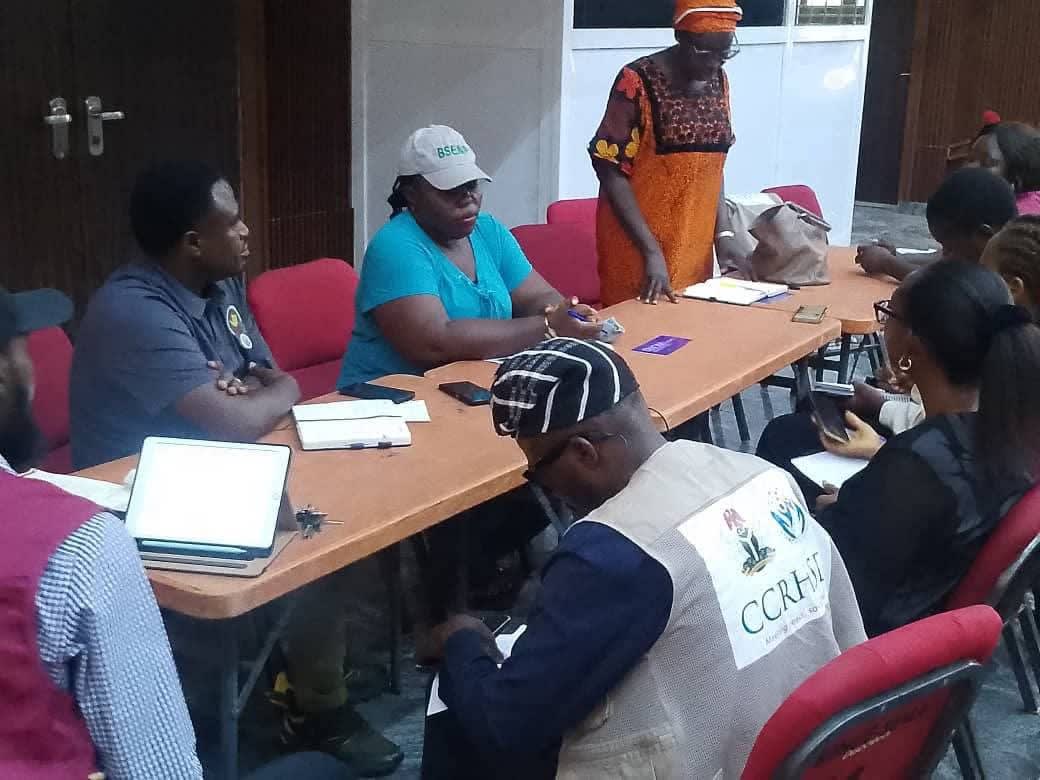
The Benue State Emergency Management Agency (Benue SEMA) on Tuesday, 13th May, 2026, received members of the Community Links Initiative on an advocacy visit at the Agency's headquarters in Makurdi, the Benue State capital. The visit, led by the organisation's Team Lead and Executive Director of the Centre for Community Resource, Health and Social Development, Mrs. Ugboga Adaji, was focused on strengthening the partnership between the Community Links Initiative and Benue SEMA in addressing the complex humanitarian challenges confronting displaced and vulnerable communities across the state.
The visit reflects a growing recognition among civil society organisations and development partners that effective humanitarian response in Benue State requires coordinated, multi-stakeholder engagement. That Benue SEMA, as the state's primary emergency management institution, is the right partner for that collaboration.
Commending Leadership That Shows Up
Speaking during the meeting, Mrs. Adaji expressed appreciation for the warm reception extended to the delegation by Benue SEMA's leadership. She also took the opportunity to commend the Governor of Benue State, His Excellency Rev. Fr. Dr. Hyacinth Iormem Alia, for his continued humanitarian interventions and unwavering commitment toward improving the welfare of vulnerable persons across the state.
Her commendation reflects what many organisations working on the ground in Benue State have observed, that the current administration's posture toward humanitarian issues is not merely rhetorical. It is backed by funding, political will, and a consistent pattern of engagement with both state and non-state actors working to alleviate the suffering of displaced persons and conflict-affected communities.
Six Years. Three Communities. One Mission.
At the heart of the visit was the Community Links Initiative's six-year strategic intervention programme, a long-term, community-focused effort targeting areas most severely impacted by insecurity, armed banditry, and the resulting humanitarian crises in Benue State.
Mrs. Adaji identified three focus areas for the programme: Jato-Aka in Kwande Local Government Area, and Yelewata and Mega Camp in Guma Local Government Area. These communities, she noted, are among the worst-hit in the state, areas where the intersection of armed violence, displacement, and humanitarian need has created some of the most complex and persistent challenges that Benue SEMA and its partners continue to navigate.
Mega Camp in Guma LGA is one of Benue SEMA's largest and most active IDP settlements, currently hosting thousands of displaced residents. The inclusion of Mega Camp in the Community Links Initiative's intervention scope is particularly significant, it signals a recognition that IDP camps are not merely temporary holding spaces but communities in their own right, requiring sustained, structured development support alongside immediate humanitarian assistance.
The six-year timeframe of the programme is itself a statement. In a context where many interventions are short-term, project-based, and tied to funding cycles, a six-year commitment signals a level of seriousness and institutional depth that Benue SEMA and the state government welcome. Sustainable peace building and community resilience cannot be achieved in months. They require the kind of long-term investment that the Community Links Initiative is prepared to make.
Three Pillars of Engagement
Mrs. Adaji outlined the three core areas of focus for the Community Links Initiative's work in Benue State: peace building, strengthening community resilience, and supporting good governance initiatives aimed at restoring hope to affected populations.
Each of these pillars addresses a dimension of the humanitarian crisis that goes beyond immediate relief. Peace building recognises that the root causes of displacement in many Benue communities are rooted in armed conflict and communal tensions that require deliberate, sustained intervention to resolve. Community resilience acknowledges that affected populations need not just external support but internal capacity, the ability to absorb shocks, adapt, and recover without indefinite dependence on humanitarian aid. And good governance support recognises that lasting change requires institutional and civic infrastructure that can sustain development gains long after any single programme has ended.
Together, these three pillars represent a comprehensive approach to humanitarian and development work that aligns closely with Benue SEMA's own operational philosophy, one that views emergency response not as an end in itself but as part of a broader continuum from crisis to recovery to resilience.
Benue SEMA's Response was Open Doors, Clear Standards
Responding on behalf of the Executive Secretary, Sir James Aondoakaa Iorpuu PhD, the Head of Administration, Dr. Donald Komgbenda, appreciated the Community Links Initiative for the visit and assured the delegation of the Benue State Government's readiness to collaborate with credible humanitarian and development partners in addressing the challenges facing displaced and vulnerable persons in the state.
Dr. Komgbenda further noted that Governor Hyacinth Alia's administration remains committed to supporting programmes and partnerships that promote peace, sustainable development, and improved living conditions for affected communities across Benue State. This commitment, he emphasised, is not conditional on political alignment or institutional affiliation, it is rooted in a recognition that the scale of humanitarian need in Benue State requires every credible actor to play their part.
Why This Partnership Matters
The visit by the Community Links Initiative is part of a broader pattern of civil society and development organisations deepening their engagement with Benue SEMA, a pattern that reflects the agency's growing reputation as a credible, transparent, and operationally effective institution under the leadership of Sir James Aondoakaa Iorpuu PhD.
For the communities of Jato-Aka, Yelewata, and Mega Camp, communities that have lived with the consequences of armed violence and displacement for years, this partnership represents something concrete. It means that organisations with the capacity and the commitment to support long-term recovery are choosing to invest their resources in their communities. It means that Benue SEMA is not the only institution standing between those communities and complete abandonment. And it means that the conversation around their futures is shifting, slowly but meaningfully, from crisis management to community rebuilding.
That shift is what Benue SEMA has always worked toward. And partnerships like this one are how it gets closer.
Benue SEMA's Commitment to Partnership
Benue SEMA reaffirms its commitment to engaging, supporting, and coordinating with all credible humanitarian and development partners working to improve the lives of displaced persons and vulnerable communities across Benue State. The agency's doors remain open to organisations that bring genuine intent, demonstrated capacity, and a long-term commitment to the people of Benue State.
For enquiries, partnership discussions, or to report a humanitarian situation, contact Benue SEMA directly.
T
Tema Ager
Official Release